Planning permission, explained: what it controls, what gets refused, and how long it takes
Most people meet the planning system twice: once when they want to change a house they own, and once when they discover — too late, mid-purchase — that the house they are buying already has a change someone else made without asking. Both moments are avoidable. The rules are knowable, the paperwork is public, and the outcomes are more predictable than the folklore suggests.
This is the hub for everything we publish on planning — the category that decides what you are allowed to build, extend, convert or knock down. If you only take one thing from it, take this: planning permission is not a tax on ambition. It is a filter, and it refuses far less than people fear. Across the planning authorities we currently hold data for, roughly one decided application in ten is refused. The other nine get through — often with conditions, rarely with drama.
Below, the questions worth asking before you buy, sell or build, each linking down to the detail. At the bottom: exactly how we counted, and where our numbers stop.
The first question is almost always the wrong one
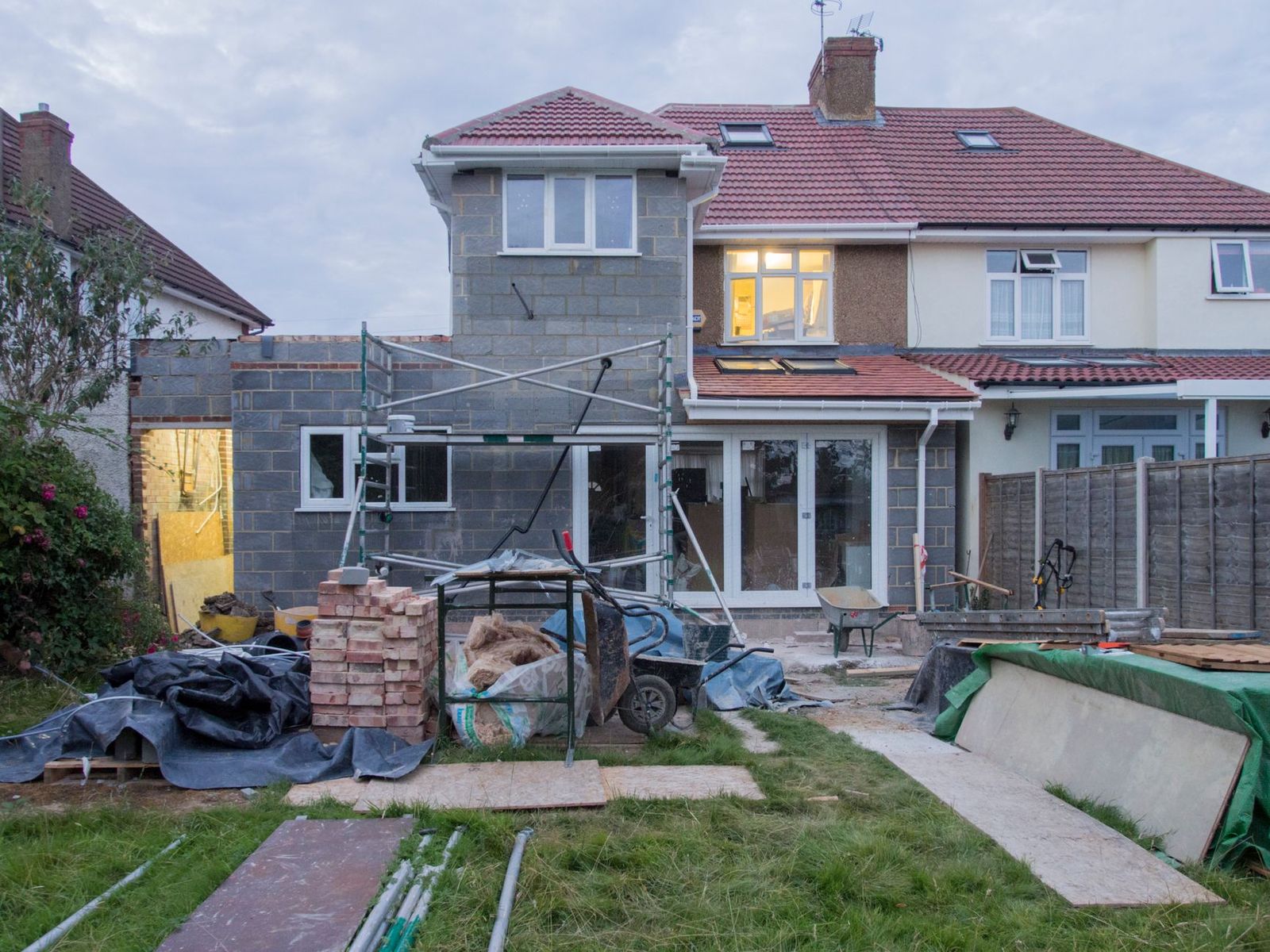
People start with "will they let me?" The better opening question is "do I even need to ask?" A large share of ordinary domestic work — a modest rear extension, a loft conversion within the roofline, a garden building, replacement windows — falls under permitted development: rights that let you build without a full application, subject to strict size and siting limits.
Permitted development is where most of the money and anxiety is saved or lost. Overstep the volume allowance by a few cubic metres, build forward of the principal elevation, or do any of it on a house that has had those rights stripped, and you are back in the full system — sometimes retrospectively, which is the expensive way to find out. If you want certainty before you start, a lawful development certificate is the instrument that puts it in writing: it confirms the work was lawful, and it is the document a future buyer's solicitor will ask for.
So the honest decision tree is: is it permitted development? If not, do I need planning permission? Our short answer to the most common version of that — do I need planning permission to build an extension? — walks through the size thresholds that flip a job from "just build it" to "apply first".
What actually strips your rights
Permitted development is a default, and defaults get switched off. The four things that most often do it:
- An Article 4 direction, which removes specific permitted-development rights across a defined area — commonly to protect a streetscape. If you own inside one, the "you don't need permission" advice from a mate in the next postcode simply doesn't apply to you.
- A conservation area designation, which tightens the rules on cladding, roof alterations, demolition and trees, and lowers the bar for what needs consent.
- Listed building status, which is a different regime entirely: listed building consent can be required for internal changes that would be nobody's business in an ordinary house.
- A tree preservation order, which quietly governs that oak you were planning to fell to make room for the extension.
None of these show up when you glance at a photo of a house. All of them show up in the searches — which is why buyers who wait for their solicitor to surface them are finding out months into a purchase. If you are weighing up an area rather than a single house, our guide to researching a neighbourhood before buying covers where these constraints cluster.
What gets refused — and it isn't what you'd guess
Here the data is blunt and slightly reassuring. Across 232,235 applications in the study's authorities, and looking only at decisions actually made between 2023 and mid-2026, the overall refusal rate is about 10%. Refusal is the exception, not the rule.
But the rate is not flat, and the variation is the useful part:
- Outline applications — where you are testing the principle of development before designing it — are refused most often, around 15%. You are asking the hardest question ("should anything be built here at all?") first.
- Full applications, the householder-and-small-scale workhorse of the system, sit near the average at about 11%.
- Heritage and tree applications are refused least — under 8% — because by the time most people apply for work on a protected asset, they've already been steered toward something acceptable.
The pattern says something real: the system refuses principle far more than it refuses detail. Get the principle right — the right use, the right massing, the right respect for what's next door — and a refusal becomes unlikely. Which use class a building sits in, and whether your plans imply a change of use, is often the hidden principle that decides everything.
And the council matters more than almost anyone admits. Among the authorities in the study, the refusal rate ranges from under 2% at the most permissive to over 20% at the strictest. Same country, same national policy, a tenfold difference in your odds. It is one of the strongest arguments for reading your specific council's record before you design, rather than assuming a national average applies to your street.
How long it really takes
The other myth is that planning is interminable. For the decisions in this study, the median time from validation to decision is 56 days — about eight weeks — and even the slow tail is bounded: nine in ten decisions land within roughly five months. The statutory target for minor applications is eight weeks, and the median sits right on it.
That doesn't mean your project takes eight weeks end to end. It means the council's clock — the part you don't control — is more predictable than the parts you do: the design, the drawings, the neighbour who objects, the section 106 agreement or community infrastructure levy that larger schemes trigger. Budget for the pre-application work; the determination itself is rarely the bottleneck.
Planning and the things it collides with
Planning never decides in isolation. The same constraints that gate a build also gate a purchase, which is why this category overlaps with the others we publish:
- Flood. A house in flood zone 3 faces a harder planning test and a harder insurance conversation. Planning and flood risk are read together, not separately.
- Green belt. Green belt land carries a presumption against most development that overrides a lot of otherwise-reasonable plans.
- Heritage and trees, as above, which quietly convert "permitted" into "please apply".
The point of a grounded view is that you see all of these against your address at once, instead of discovering them one search at a time.
Where to go from here
- Test a specific address — permitted development, constraints, nearby applications — by asking the house directly.
- Browse the wider UK property intelligence hub for how planning sits alongside price, energy and risk.
- See how we put it together in Explorer.
Read the two questions that lead into this hub — do I need planning permission to build an extension? and how do I research a neighbourhood before buying? — and follow the glossary links above for any term that made you pause. For the evidence that the council decides your odds more than the extension does, read which councils refuse the most extensions.
Methodology
Source and scope. Published local-authority planning records, analysed on 18 July 2026. The limits matter as much as the headline figures.
Coverage. The study contains 232,235 applications across 46 planning authorities — not the full 330-plus UK authorities. The sample is weighted toward alphabetically early councils plus a cluster of Kent authorities, so it is not nationally representative. Read every rate as "across the councils studied", never "across the UK".
Refusal rate is refusals divided by all decided applications between 1 January 2023 and 18 July 2026. Undecided, withdrawn, referred and unresolved applications are excluded. On that basis: 126,974 approved or approved with conditions versus 14,294 refused — an overall refusal rate of 10.1%. By application type over the same window: Outline 15.2%, Full 11.2%, Trees 7.5%, Heritage 4.8%.
Decision time runs from application start to decision. Negative durations and those over two years are excluded as likely data-entry artefacts. Across 148,200 qualifying decisions: mean 81 days, median 56 days, 90th percentile 157 days.
Council spread = the same refusal-rate formula computed per authority over the 2023–2026 window, restricted to councils with at least 300 decided applications so small samples don't distort the range. The reported range (under 2% to over 20%) is the min and max across those 43 qualifying authorities.
Where the sample cannot support a claim — for example, a truly national refusal rate — we do not make one.
Ask the House about any property
Get grounded answers on the risks, value, planning, and energy behind any UK home — plain English, no jargon. Free to try.