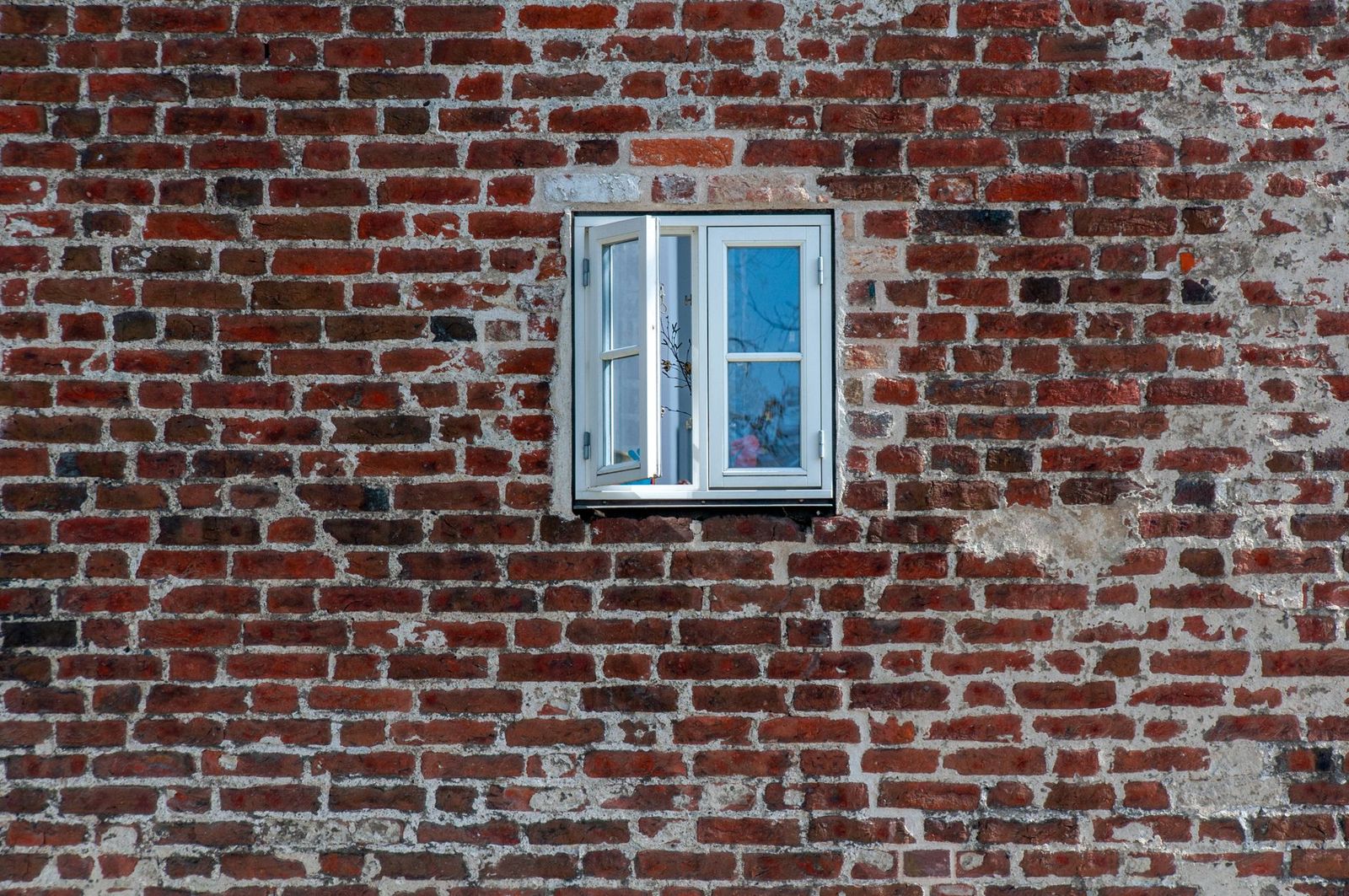
The building itself: what homes in England and Wales are actually made of
A property listing is a work of persuasion. It sells you the morning light, the "characterful" hallway, the "scope to modernise". What it never sells you is the thing you are actually buying: a structure of a certain age, made of certain materials, holding heat well or badly, sitting on land you either own outright or merely rent for a while.
That structure — the fabric, the age, the condition, the tenure — is the building. It is the least romantic and most consequential part of any home, and it is the part a good listing works hardest to keep vague. This is the hub for reading it honestly.
We can be concrete about the building stock of England and Wales because the national Energy Performance Certificate register describes it at enormous scale. It contains 22,518,549 certificates for homes sold, let or built since certification began, making it one of the clearest portraits of what those two nations are actually made of.
England and Wales are old, and mostly houses
Start with the shape of the stock. Group every certificate by property type and the picture is less varied than the portals imply:
| Property type | Certificates | Share |
|---|---|---|
| House | 14,384,116 | 63.9% |
| Flat | 5,392,115 | 23.9% |
| Bungalow | 2,314,626 | 10.3% |
| Maisonette | 413,599 | 1.8% |
Roughly two in three certificates describe a house; add bungalows and three-quarters of the stock is low-rise and freehold-shaped. Flats are a firm quarter — and, as we'll come to, a quarter of the market that comes with a second, invisible contract attached.
Now the age. The single largest dated band in the register is 1950–1966 (3,460,152 certificates), followed by 1900–1929 (2,565,078) and 1967–1975 (2,414,528). The four largest dated bands are all pre-1976. And 1,794,653 certificates describe homes built before 1900 — Victorian and older, still standing, still selling, still being lived in.
This matters because age is destiny for a building's fabric. A pre-1919 house was built with solid walls, lime mortar and no cavity to fill. A 1930s semi has a cavity but no insulation in it as built. A post-2010 home was built to a modern energy standard from day one. When a listing says "period features", read "solid walls and a heating bill to match" — and price the difference in.
The energy truth the certificate half-tells
Here is the finding most buyers never see. Group the whole register by its headline energy band:
| Band | Certificates |
|---|---|
| A | 140,005 |
| B | 2,582,530 |
| C | 7,430,726 |
| D | 8,215,469 |
| E | 3,076,173 |
| F | 822,184 |
| G | 251,370 |
The most common band in England and Wales is not C, and it certainly isn't B. It is D — 8,215,469 certificates, 36.5% of the stock. Add E, F and G and 54.9% of all certificates sit below band C. The average home is, quite literally, below average by the standard the government sets for a "good" home.
But the band is only half the story, and this is where we'll happily state the limits of a product we sell. An EPC records two scores: the property as it stands, and the property as it could be after recommended improvements. Across the 20,617,164 certificates that carry both, the average current efficiency is 64.8 — a mid-band D — and the average potential is 79.4, a comfortable C. The typical home in England and Wales is a D that could be a C, held back by nearly fifteen points of loft insulation, draught-proofing and a better boiler that nobody has got round to.
Two lessons fall out of that gap. First, the band on the listing is a snapshot of neglect, not a life sentence — a lot of "poor" homes are one weekend and a few thousand pounds from respectable. Second, the certificate is a model, not a measurement: it assumes standard occupancy and standard weather, and an assessor's assumptions can move a borderline home a full band either way. Treat the band as a strong hint, not a verdict. If you want the longer version of that argument, the spoke on what an EPC rating actually means when you're buying and the definitions of the EPC band and the EPC certificate itself carry it.
What actually sinks a building
Buyers arrive to a viewing braced for the wrong dangers. The fear is usually Japanese knotweed or dramatic subsidence — the horror-story defects. Those are real, and a mortgage valuer will flag them, but they are comparatively rare and, crucially, findable. The building problems that quietly cost the most are duller:
- Damp and its causes. Penetrating damp through failed pointing, rising damp through a bridged course, condensation in a home that can't breathe — none of it is exotic, all of it is expensive, and a coat of magnolia hides it for exactly one viewing.
- The roof you can't see from the pavement. Slipped tiles, tired felt, a valley that's been patched twice — the roof is the fabric's first line of defence and the last thing anyone inspects. It's worth knowing how to check the condition of a roof before you buy without a ladder.
- The paperwork defects. On flats especially, cladding remediation and the EWS1 form have grounded thousands of sales since Grenfell — not because the building fell down, but because nobody could prove it wouldn't.
- The invisible ones. Radon in the wrong geology, wiring last touched in 1974, a boiler on borrowed time. None of these show up in a photograph.
The through-line is that the dangerous defects are the ones that don't photograph. A listing is optimised to show you the opposite. That asymmetry — the seller knows the building's history and you're guessing from twelve staged images — is the entire reason this site exists.
You're not just buying bricks — you're buying a tenure
There is one more layer to "the building", and it's the one that catches buyers coldest, because it isn't physical at all. When you buy a home you buy a legal interest in it, and there are two main flavours. Own the freehold and you own the building and the ground under it outright. Buy a leasehold — as most of that 23.9% living in flats do — and you own the right to occupy for a fixed term, while someone else owns the building and charges you for the privilege.
That distinction is not academic. Leasehold brings a ground rent, a service charge that can rise without much warning, and a lease length that is itself an asset — one that gets alarmingly expensive to extend as it falls below eighty years. Two physically identical flats, same street, same view, can be worth wildly different sums because one has a 999-year lease and the other has 74 years and a freeholder with opinions. If you're weighing one against the other, start with the plain-English breakdown of freehold versus leasehold, and read the lease before you read the kitchen. A listed building adds a third constraint on top — protection that limits what you can change about the fabric you nominally own.
How to read a building before you fall for it
None of this requires a survey to start. Before you book a viewing you can already know the property's likely age, its EPC band and the gap to its potential, its tenure, and whether it sits under a constraint like a conservation area or a flood zone — because that data exists, and we've spent a long time making it answerable in plain English rather than PDFs.
That's the point of the wider site, and of the six categories this hub sits inside: the risks under a home, its value, the planning history, the area around it, and its energy performance — with the building itself holding them together. For all six read from a single address at once, see one house, six ways, where we walk one real, anonymised home through every category. Ask the House any question about a specific property and it answers from the same registers this post was written from. The simplest way in is to ask about a property you're considering, or to explore what the platform reads before you get emotionally attached to a hallway. And for the flip side — how the building's paperwork, not its brickwork, is what most often kills a house sale — read the companion piece.
A listing wants you to fall for a home. The building just wants to be understood. Understand it first, and the falling is a lot safer.
Methodology
Source and scope. The England and Wales domestic EPC register: 22,518,549 certificates, analysed on 18 July 2026.
- Property-type shares use the full register.
- Energy-band distribution uses the 22,518,457 certificates carrying a valid A–G band; one blank and 91 malformed ratings are excluded.
- Current versus potential efficiency uses 20,617,164 certificates with both valid scores, producing averages of 64.8 and 79.4.
- Construction age uses the register's published age bands.
Limitations, stated plainly. These are certificates, not unique dwellings: a home reassessed at each sale or let appears more than once, so counts run somewhat above the number of distinct properties — the proportions are the reliable part, not the absolute totals. The register also under-covers homes that have not transacted or been re-let since certification began, and it excludes Scotland and Northern Ireland (separate registers). Construction-age bands are stored in more than one format (an "England and Wales:" RdSAP prefix on most rows, bare bands on others), and 1,458,597 certificates carry no usable age at all ("NO DATA"), so age figures are cited as specific band counts rather than a single tidy national percentage. Finally, the EPC score is a model of a standardised home under standardised conditions, not a meter reading — which is exactly why we treat the band as a strong hint and not a verdict.
Ask the House about any property
Get grounded answers on the risks, value, planning, and energy behind any UK home — plain English, no jargon. Free to try.